
PAT Testing
UK Safety Management operatives perform expert electrical PAT testing in the UK, helping you meet electricity at work regulations and reduce insurance premiums.
- UK wide support from local engineers
- Clear, upfront costs and competitively priced
- Get all your services looked after under one roof
- A single point of contact for multi-sites
What Is Portable Appliance Testing?
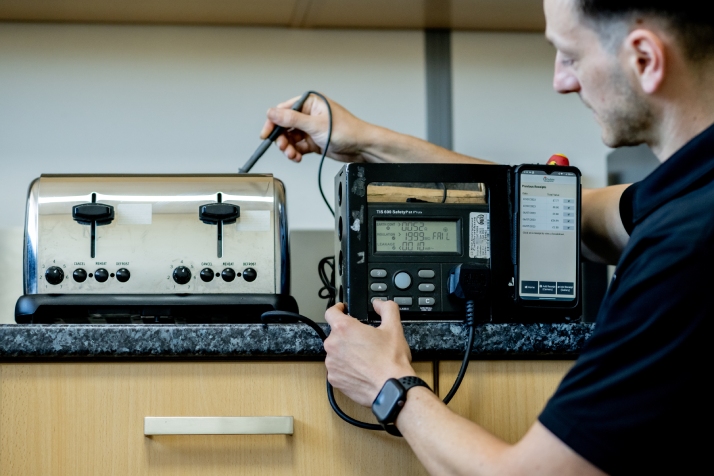
We at UK Safety Management are proud to be the leading provider of portable appliance testing services. Our expertise lies in conducting comprehensive inspections of electrical appliances, commonly known as PAT testing. By engaging our skilled team, you can ensure a thorough assessment of your appliances. Our experienced staff will walk you through a personalised procedure, taking into consideration the number of appliances requiring testing. We use quality testing tools, including clamp metres and test leads, to deliver high-quality results.
Interested in our comprehensive PAT testing options?
What Does PAT Testing Involve?
Once you approve our suggested methodology, we will schedule a mutually convenient date to visit your premises and perform the PAT test. Our team is dedicated to working quickly and efficiently, minimising any disruptions for our clients. Rest assured that our staff will conduct a comprehensive examination, conducting approximately thirty tests within an estimated hour of completion. Overall, we prioritise a swift and uncomplicated process for our clients seeking PAT testing services.
Are PAT Tests Mandatory?
Portable electrical appliances play a vital role in contemporary workspaces and households, emphasising the importance of ensuring their safety to safeguard individuals and property. With PAT testing, we aim to mitigate the risk of electrical accidents and ensure compliance with the UK’s legal safety regulations for electrical equipment. As seasoned PAT testers, we conduct thorough visual inspections, provide equipment maintenance, and perform testing and calibration using specialised software and tools. Moreover, we offer additional tests such as high voltage testing, temperature testing, and much more!
Why are PAT tests important?
PAT tests are crucial because they offer a fast and cost-effective means to guarantee the optimal condition of your electrical appliances. Completing a PAT test is essential as it enables a thorough assessment of your appliances by experienced professionals, providing you with valuable insights into their condition. By having a PAT test completed by our experts, you can ensure that your appliances continue to function at a high standard consistently.
Will I Need A PAT Test Certificate?
PAT tests are not legally mandated, so there is no obligation to present a certificate upon completion. Nevertheless, our team will provide you with the necessary documentation to serve as evidence of the conducted PAT test, should the need arise. Our provided documents will be transparent and easily comprehensible, outlining all pertinent findings. If you have any queries or uncertainties regarding the PAT test documents that we provide, please don’t hesitate to seek clarification from our team.
How Often Should PAT Testing Be Done?
There are no specific requirements regarding the frequency of PAT testing. Typically, site managers opt for annual PAT tests. At UK Safety Management, scheduling a PAT test is a simple and hassle-free process. If you wish to avail yourself of this service, feel free to contact our team and make the necessary arrangements. Don’t hesitate to contact our experts today if you’re unsure as to whether a PAT test is due for your site.
Customer Experience & Reviews
Our clients trust us for quality services that are reliable, efficient, and affordable. Read our 5-star reviews below which highlights our commitment to health and safety compliance.
Very happy with the service UK Safety Management provide. Always call to remind me when we are due for renewal. Very friendly, efficient, professional service throughout. Would highly recommend.
Paul, Bucci Freight Services Ltd
We have worked with UKSM for several years now and enjoy a good working relationship with them. They deliver our PAT testing. Their work is of high standard and cost of service is also good. Nothing is too much trouble, and we look forward to working in partnership with them in the future.

David, Langley House Trust
We have worked with UKSM for several years now and enjoy a good working relationship with them. They deliver our PAT testing. Their work is of high standard and cost of service is also good. Nothing is too much trouble, and we look forward to working in partnership with them in the future.

David, Langley House Trust
FAQ's
New appliances do not usually require PAT testing immediately, but they should be visually inspected before use. Testing is recommended after installation and as part of routine safety checks.
PAT testing is not strictly a legal requirement in the UK. However, UK law requires all employers, landlords, and businesses to ensure electrical equipment is safe. PAT testing is the most common and effective way to meet this duty and demonstrate compliance with regulations.
A professional PAT testing service typically includes:
Visual Inspection – Checking each appliance for obvious damage, wear, or faults.
Electrical Testing – Using calibrated PAT testing equipment to measure safety parameters like insulation resistance, earth continuity, and leakage current.
Labelling – Applying clear pass/fail labels on each appliance.
Detailed Report – Providing a comprehensive PAT testing certificate listing all tested appliances, their results, and recommended retest dates.
Advice & Recommendations – Guidance on repairing or replacing any faulty equipment.
PAT testing is recommended for anyone responsible for electrical appliances in a workplace or rental property. This includes:
Landlords and letting agents
Offices and commercial buildings
Shops and retail premises
Construction sites
Schools and colleges
Hotels, restaurants, and cafés
HMOs and rental properties
PAT testing is for all portable or plug-in electrical appliances, including:
Kitchen appliances like kettles, microwaves, and fridges
Office equipment like computers, printers, and chargers
Power tools and cleaning equipment
Extension leads and power strips
PAT testing helps businesses, landlords, and organisations comply with UK health and safety regulations, including:
Health and Safety at Work Act 1974 – Requires employers to ensure electrical equipment is safe.
Electricity at Work Regulations 1989 – Covers the safe use and maintenance of electrical systems.
Management of Health and Safety at Work Regulations 1999 – Mandates risk assessments and safety measures for equipment.
The cost of PAT testing can vary depending on how many appliances you need tested.
We believe in offering transparent and competitive PAT testing services. On average, costs range from £1.50 to £5.00 per item, ensuring businesses can plan effectively while receiving the professional support they require.
A PAT test certificate does not have a fixed expiry date. Its validity depends on the recommended retesting interval, which is based on the type of appliance, how often it’s used, and the environment it’s in.
Low-risk office equipment may only need testing every 1–2 years, while high-risk or heavily used appliances, such as power tools or site equipment, may require testing every 3–6 months.
Latest from Our Blog
Common Myths About PAT Testing Debunked
Navigating the world of portable appliance testing (PAT) can often feel like wading through a sea of myths and misconceptions. From the overstated inconveniences to
PAT Testing: DIY vs. Professional Testing – Pros and Cons
Embarking on portable appliance testing (PAT) can prompt a common dilemma: should one opt for a DIY approach or enlist professional services? This choice hinges
The Importance of PAT Testing: Ensuring Electrical Safety in the Workplace
Navigating the intricacies of workplace safety can often seem like a daunting task, yet one aspect that simply cannot be overlooked is the importance of
Schedule Certified PAT Testing with Approved Engineers!